
- Must-sees
-
description
Bayeux / Mont-Saint-Michel / Paris
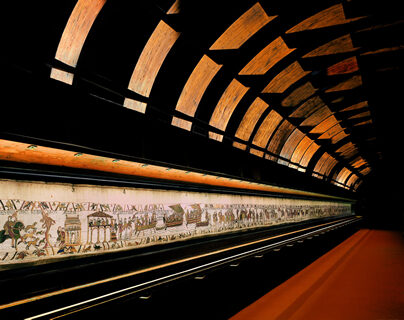
See the Tapestry of Queen Mathilda in Bayeux, actually a 70 meters (230 feet) long work of embroidery retracing the epic of William the Conqueror’s expedition to England in 1066 (battle of Hastings).
The work is the most accurate and lively document to survive from the Middle Ages and provides detailed information of the clothes, ships, arms and general lifestyle of the period. (Closed for restoration then loaned to England until June 2027)
Lunch stop and stroll around the charming old port of Honfleur on the Seine estuary, from where the founder of Quebec, Samuel de Champlain and the founder of Louisiana, cavalier de la Salle set sail. It has inspired many famous painters such as Monet and his master Boudin and is considered as a cradle of the impressionism movement.
On the way back to Paris, hike and visit on Château-Gaillard, medieval fortress and watch-tower constructed by Richard the Lionheart in the 12th Century on the high chalk cliffs dominating a great meander in the River Seine. Today it is a ruin but below, Les Andelys forms a charming riverside village
Return to Paris, accomodation at Paris hotel, end of our services
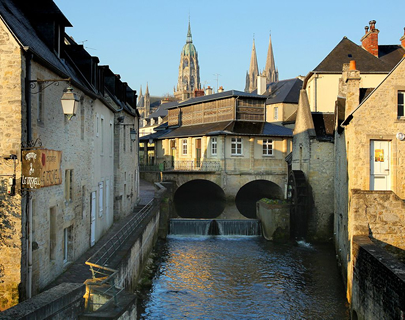 The Town of Bayeux
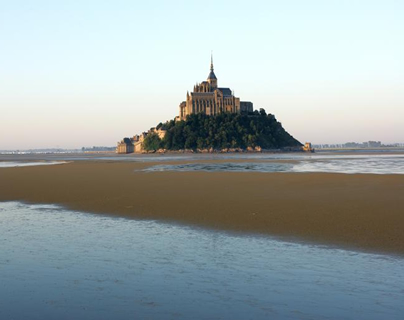 The Mont-Saint-Michel
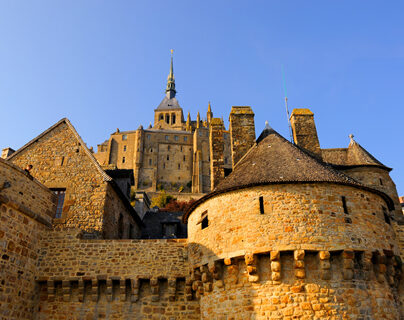 Mont-Saint-Michel
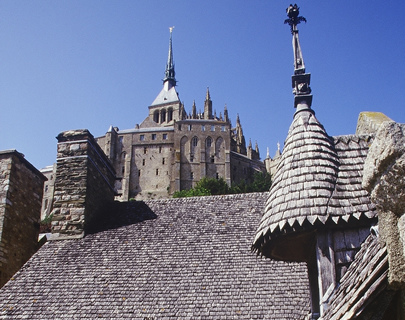 Mont-Saint-Michel
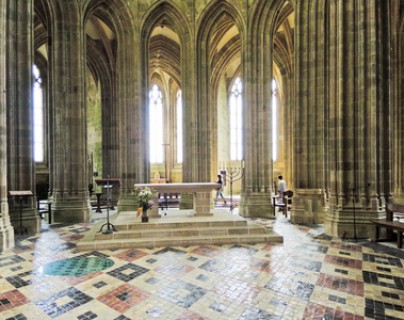 Chancel of the Church
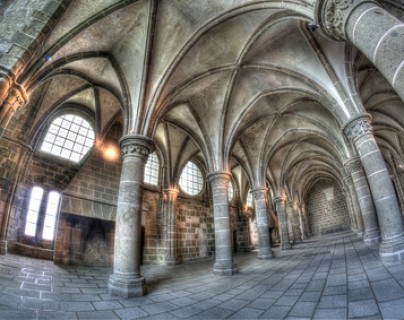 The "Knights Room"
 The 'Great Pillars' Crypt
 -
description
Mercurey - Cormatin - Chalon-sur-Saône
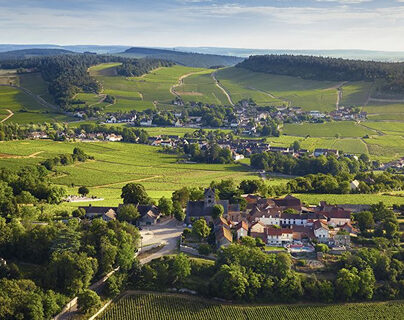
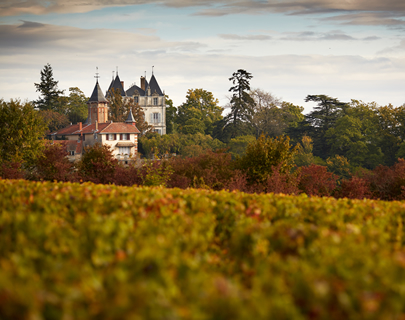
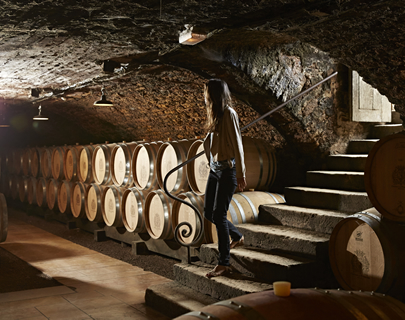
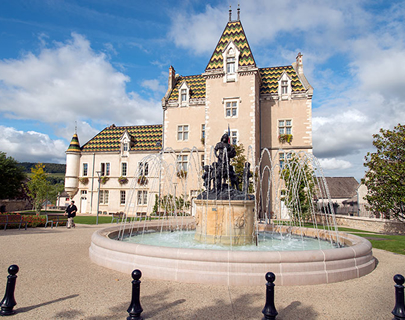
Mercurey is the largest and best known of the village appellations on the “Côte Chalonnaise”. They produce red and white wines of average aging, at an affordable price; the château de Chamirey, a very beautiful 17th century building, has a winery classified as a Historic Monument and produces wines characterized by their aging in barrels. (visit and commented tasting)
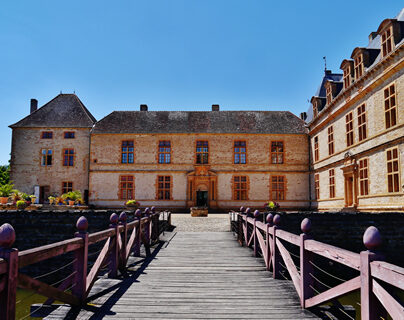
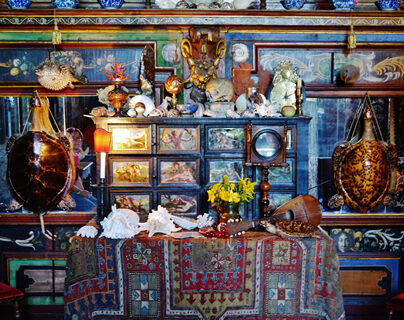
Visit of the Cormatin castle that contains one of the most beautiful decor of Louis XIII style in France
The apartments, painted, sculpted and gilded with splendour in 1627-28, offer the most complete and best-preserved testimony to decorative art at the time of Marie de Medici. Furniture, paintings, tapestries, and period objects make the evocation very attractive.Châlon-sur-Saône, in the heart of the vineyards of the “Côte Chalonnaise”, economic capital of an industrial region but also of agriculture and livestock. Its fairs and carnival are very popular. Wine purchases can be made at the Maison des Vins de la Côte chalonnaise.
The old Chalon has beautiful half-timbered facades, The Saint-Vincent cathedral with elements which go from the 11th to the 12th century presents in the chapel a beautiful stained glass window of the “Woman with the twelve stars” of the Apocalypse, whose symbolism inspired the European flag.Return to Paris region, end of the tour
-
description
Beaune - Savigny-les-Beaune - Pommard - Meursault - La Rochepot
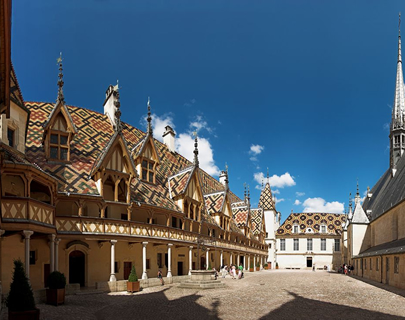
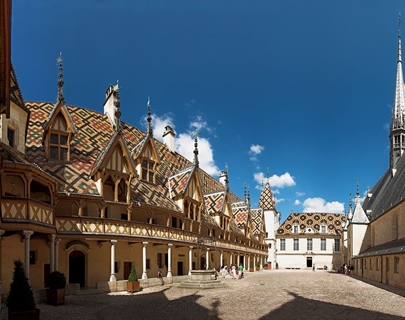
Visit the Hôtel-Dieu, a former hospital founded in 1443 by Nicolas Rolin, chancellor of the Duke of Burgundy, and his wife, Guigone de Salins.
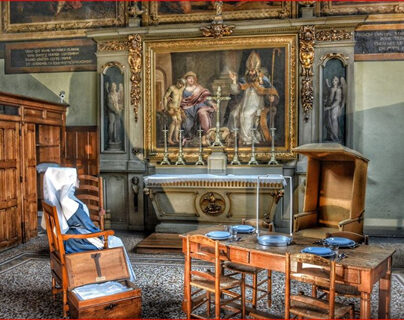
From the street, you can see a long stone façade topped by a slate roof, with an entrance heralded by a slender bell-tower and an awning.It is only when you step into the main courtyard that you see the flamboyant roof with varnished tiles, a shining symbol of ducal Burgundy and now world famous.The sumptuous Salle des Pôvres housed thirty beds for the sick and destitute, and it is here that you start your visit. You can still see the remarkable panelled vault and the strong oak framework of the building, decorated with a frieze of carved human and animal heads.
As you walk on, you will discover the rich heritage of this site through extraordinarily furnished rooms: statues, chests, tapestries, pewter ware and more.
You will catch sight of the day to day life in this hospital where a community of Hospital Ladies, instituted by the founders, provided medical care.The polyptych of the Last Judgement, painted for the hospital by the Flemish master Rogier van der Weyden, is the jewel of the museum.
The last room, Salle Saint-Louis, equipped with multimedia devices, focuses on three themes: the collections of objects of the 15th and 16th centuries, hospital care from 1800 to 1940 and the famous vineyards and wine auction of the Hospices Civils de Beaune.
The Hospices de Beaune are also famous for their exceptional wine estate, with 85% of the Premier Cru and Grand Cru, which are sold at auction on the third Sunday of November.
Visit the castle-museum of Savigny-les-Beaune, located on a wine estate, at the entrance is a wine-tasting space, as well as an exhibition … of Abarth competition cars, the 2nd floor is dedicated to motorcycles, bringing together more than 500 models from all countries!
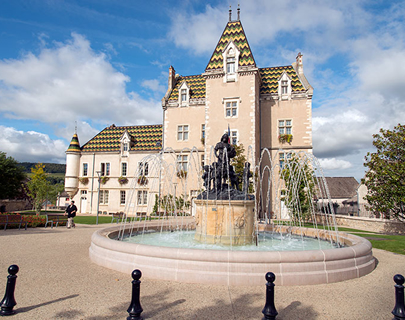
Pommard takes its name from an ancient temple dedicated to Pomona, the goddess of fruit and gardens. The red wines of the AOC Pommard “firm, colourful, full of frankness and good conservation”, were appreciated by Ronsard, Henry IV, Louis XV, Victor Hugo … The Premier Crus Epenots, Vaumuriens and Rugiens are highly sought after. The castle is a beautiful building from the 17th century, surrounded by a park.
Meursault, the appellation is dedicated to high quality white wines, characterized by aromas of hazelnut and ripe grapes, which can age up to fifteen years; The most famous “climats” (parcel of vine land, with defined boundaries and place name attached to a terroir) are Perrières, Genevrières and Charmes.
The Château de Meursault estate has a fine 17th century building and even older cellars.
Château de la Rochepot, (Outside view – currently closed) the castle emerges from the woods, on a height, as a fairy-like appearance. the primitive construction dates from the 13th century, altered in the 15th century then restored in the 19th century by the family of President Sadi Carnot.
Dinner and overnight stay in a chateau-hotel or in a private chateau receiving guests depending on the option chosen.
-
description
hrtrtbr
rtg zertg tg
-
description
Cultural and gourmet Normandy
Visit the charming port of Honfleur on the Seine estuary, from where Samuel de Champlain, founder of Quebec, and the cavalier de la Salle, founder of Louisiana, set sail.
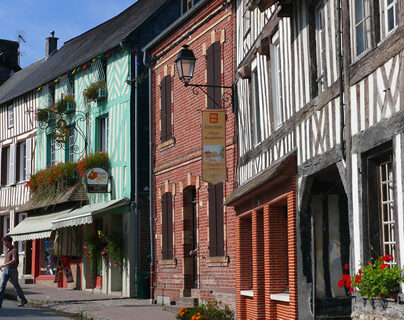
Honfleur inspired many famous painters such as Monet and his master Boudin. It is considered to be a cradle of the Impressionist movement.Visit of Pont-l’Evêque with its 17th and 18th century private mansions and half-timbered houses.
Tasting of local Normandy products: andouille de Vire, Pont l’Evêque farmhouse cheese, teurgoule, Isigny caramel, cider and apple juice.Towards Lisieux, pass through one of the most beautiful villages of Normandy with its half-timbered houses: Blangy-le-Château, which organizes a painters’ fair every year.
Arrival in Lisieux, to discover the Sainte-Thérèse de Lisieux basilica, one of the rare monuments of Normandy remaining from the bombings of 1944.
Built in 1929, inspired by the Sacré-Coeur basilica of Paris and the Immaculate Conception of Lourdes, it is currently part of the most visited pilgrim site in France.Discovery of the most beautiful village of Normandy, Beuvron-en-Auge, with its half-timbered houses and halls.
Return to your hotel in Normandy.
-
description
Vezelay - Semur - Beaune and The "Route des Grands Crus"
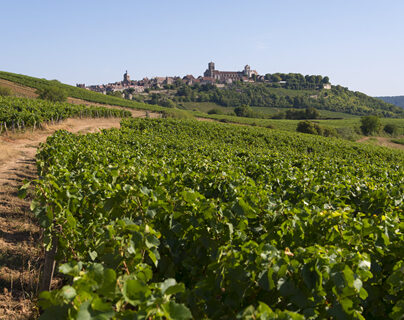
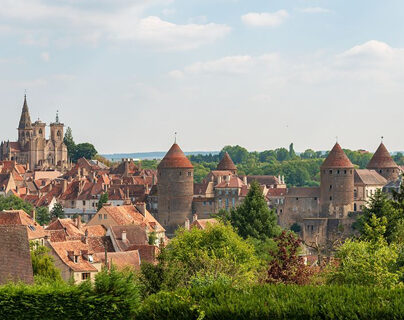
15 minutes away from the hotel, we reach Vézelay perched town, one of the main pilgrimage routes of Saint-Jacques-de-Compostelle.
We continue our route to discover the enchanting village of Semur-en-Auxois.
Arrival in Beaune, ancient city with a splendid architectural heritage and Capital of the Burgundy wines.
Visit the Hôtel-Dieu in Beaune, a marvel of Burgundian-Flemish art. The medieval building, with its preserved decor and magnificent colored glazed tiles, houses the famous polyptych of the Last Judgment, by Rogier van der Weyden, masterpiece of Flemish art.
From the 15th century until recently it served as a charitable hospital, it is now an impressive repository of art and mementos of customs and medical practices in medieval Burgundy.Visit negociants’ wine cellars in beaune, dating from the 13th/14th century, where you will be able to taste about 6 different wines
Or Wine tasting in the little town of Meursault, where the white wines, with a taste of hazelnut, dry and mellow at the same time, are considered among the best in the world.
Pommard. Who has never heard this famous name, inextricably linked with the tradition of wine-making ? The village huddles tightly around its square bell-towered church as if to leave room for the vines ! Appreciated by such great men such as Victor Hugo, the wines of Pommard are outstanding.
Private visit at a small producer in Pommard (or in another village on the ‘Route des Grands crus’)
Drive through the vineyards on the ‘Route des Grands crus’ that hold the illustrious names of the Burgundy wines to get to the Clos de Vougeot.
Tour of the historical Clos de Vougeot, built by Cistercian monks in the 12th century. Surrounded by magnificent vineyards, it houses prestigious cellars and collections of winepresses from the Middle Ages.
Return to Paris.
-
description
Baie de Somme: seal-watching and bird-watching
Second day:
Morning:
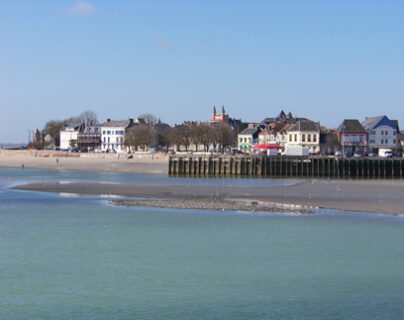
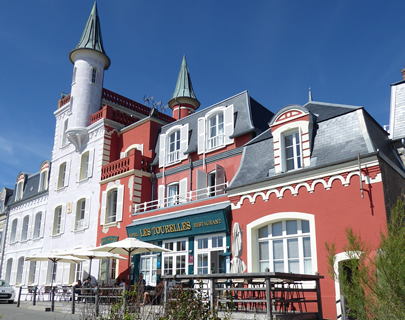
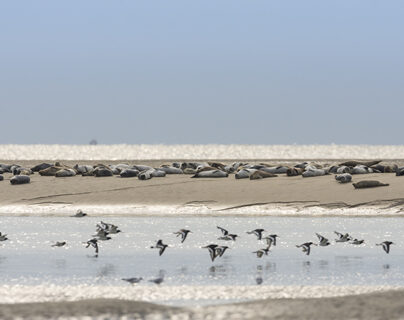
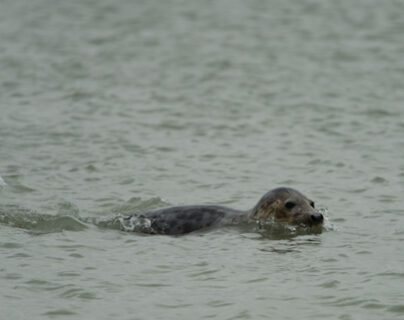
Wild seal-watching from the little town of Le Hourdel, the largest wild seal colony in France. They are visible daily during summer months on low tide. Follow your local wildlife guide who will provide you binoculars.Lunch and visit in Le Crotoy, overlooking the bay. Restaurant recommendation: Les Tourelles.
You will have some time to walk on the town seaside, stuck in-between the sea and the salt marshes.
Depending on the tide, a walk could also be possible on the impressive ‘dike of locks’.Afternoon:
Head to the other side of the bay and experience the Marquenterre National Natural Reserve with ornithological site of interest. Walk through paths and wooden viewing platforms for bird-watching including storks, cranes, egrets, herons, spoonbills,…Return to Paris
-
description
Bayeux / Mont-Saint-Michel / Paris
See the Tapestry of Queen Mathilda in Bayeux, actually a 70 meters (230 feet) long work of embroidery retracing the epic of William the Conqueror’s expedition to England in 1066 (battle of Hastings).
The work is the most accurate and lively document to survive from the Middle Ages and provides detailed information of the clothes, ships, arms and general lifestyle of the period. (closed for restoration then loaned to England until June 2027)
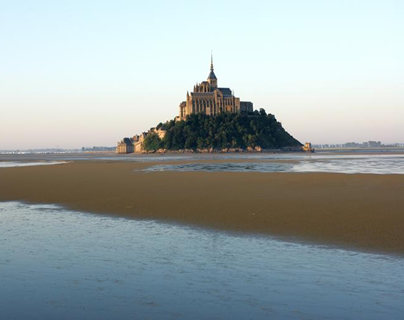
Mont-Saint-Michel: The granite island, 80 meters high in the middle of a bay forms a monumental and picturesque sight with its village houses huddled close together and encircled by walls and on top, the old abbey founded in 708 with its gothic “Marvel”. During equinoxes, watch the highest tides in Europe rising, according to a legend evoked by Victor Hugo, with the speed of a running horse.
Known as a Marvel of the Western World, the monument and its site are also now classified World Heritage sites by UNESCO.Private guided tour of the abbey and enjoy free time on to explore the island, do some shopping and have lunch.
Return to Paris, end of our services.
Inclusions:
– Transportation from and back to Paris by minivan
– English speaking expert & fun licensed guide
– 2 overnight stays in a charming 4-star hotel,
– 2 breakfasts buffet,
– All the entrance fees to the monuments and museums mentioned in the program
 Mont-Saint-Michel