
- History (WWI & WWII)
3 days in Normandy, a thorough exploration of the “DDay” Landings area
From the cradle of Impressionism to the Route of Liberty
3 days - 2 nights
-
Day 1
Paris / Giverny / Rouen / Honfleur / Bayeux
En route to Normandy, Visit in Giverny the extraordinary gardens and the house with its colorful and intimate decor where Claude Monet, leader of the Impressionist School lived from 1883 to 1926.
See the painter’s precious collection of Japanese prints and the famous Water-Lily pond.
Walking tour in the old town of Rouen, Capital of Upper Normandy with its gothic churches and half timbered houses and the old market square where Joan of Arc was burnt at the stake.
Afternoon visit of the charming port in Honfleur on the Seine estuary, from where the founder of Quebec, Samuel de Champlain and the founder of Louisiana, cavalier de la Salle set sail. It has inspired many famous painters such as Monet and his master Boudin and is considered as a cradle of the impressionism movement.
Drive along the coastal road to discover Trouville and Deauville, smart seaside resorts for the wealthy Parisians.
Accommodation near Bayeux.
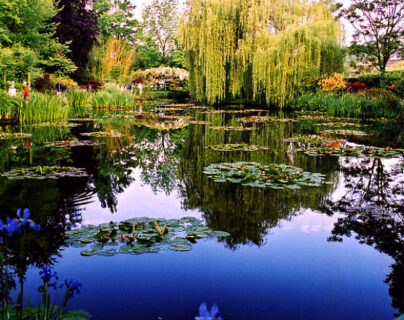 Giverny - The Water-Lilies Pond
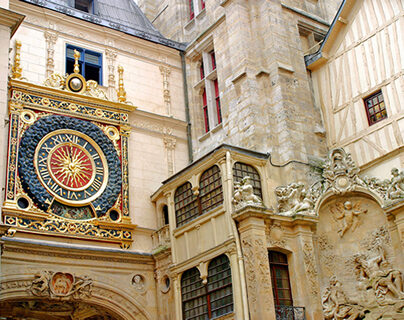 Rouen - the 'Gros Horloge'
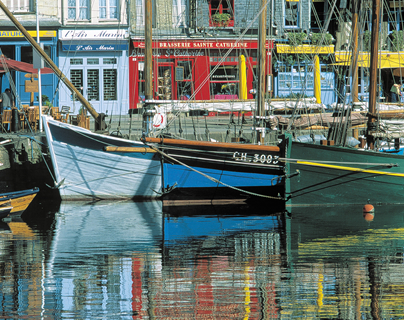 The old Port of Honfleur
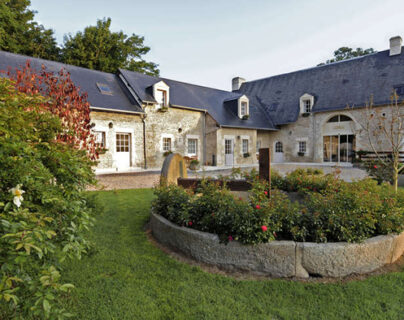 Charm hotel
 -
Day 2
Bayeux / Landing beaches / Bayeux
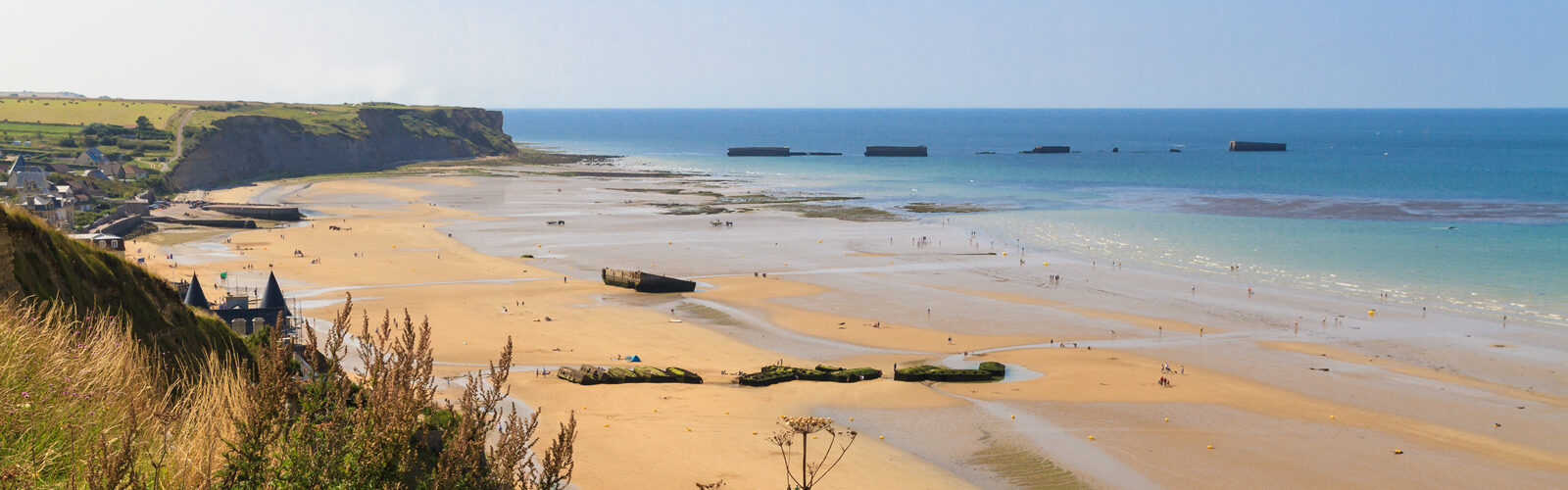
Today we will take you for a guided tour of the Landing Beaches including Arromanches where can be seen the remains of a Mulberry harbor.
Built thanks to Churchill’s vision within a few days after D. Day. This “temporary” port was used to disembark an army with all the men and supplies necessary to liberate Europe. It is one of the most extraordinary industrial and maritime achievement of the war.
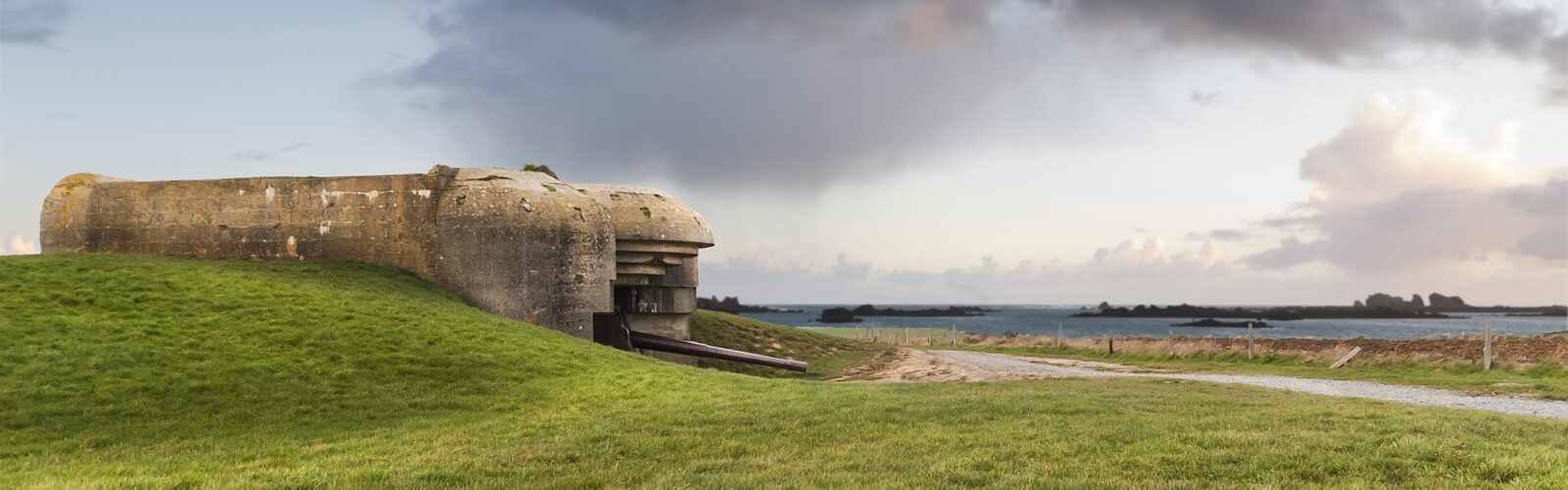
On the way to Omaha beach, visit the site of the powerful German battery at Longues-sur-mer. In spite of the heavy bombing on the night before, the German ‘pill boxes’ and their 150 mm guns were still operational on the morning of 6 June and they began firing at the allied battleships.
Continue with Omaha Beach and the moving Normandy American cemetery where 9385 Carrara marble crosses stand aligned. A memorial, inscribed with a map of the operations stands in the central alley.
The name ‘Omaha Beach’ which until 6 June 1944 existed only as an operational code name, has continued to jointly designate the beaches of three villages, Colleville, Saint-Laurent and Vierville, in memory of the soldiers of the 1st American division who landed there and suffered the heaviest casualties on ‘D.Day’. Drive and stop along the beach where your guide will show you some of the German bunkers and machine-gun nests.One of the most impressive site in Normandy, is perhaps Pointe du Hoc where the 2nd battalions of specially trained Rangers under the command of colonel James Earl Rudder captured the position by assault at dawn on 6 June, scaling the cliffs with ropes and extendible ladders but not without heavy losses – 135 rangers out of 225 – but key action for the success of D.Day.
Sainte-Mère-Eglise: A dummy hangs from the church steeple as a reminder of private Steele’s alarming experience, dropped over the area during the night of June 6th 1944, he was caught hanging from the steeple of the church by his parachute.
A parachute-shaped building houses the Airborne museum which contains mementoes of the first fighting on D.Day and a ‘Waco glider’.
Accommodation near Bayeux.
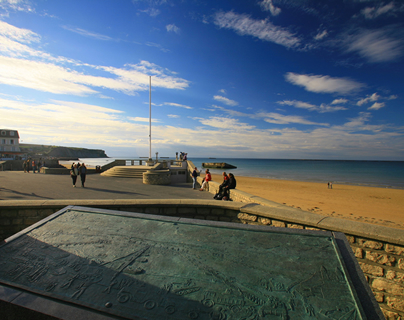 Arromanches and the "Mulberry Harbour"
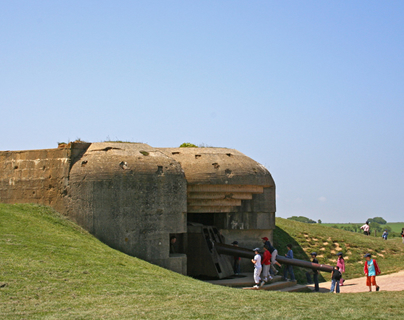 Longues/Mer - German Battery
 Omaha Beach - Normandy American Cemetery
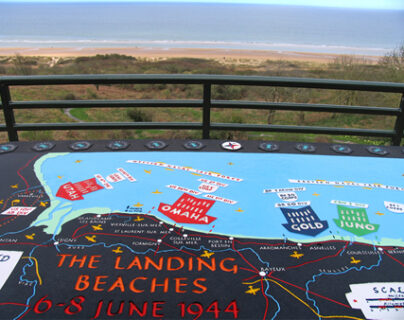 Omaha Beach - Orientation Table
 Sainte-Mère-Eglise
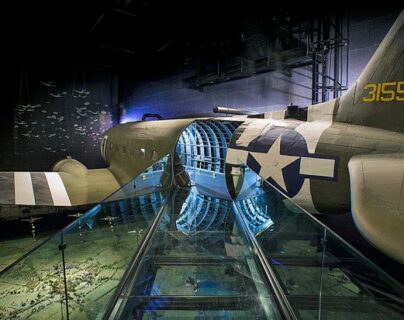 Airborne Museum
 -
Day 3
Bayeux / Mont-Saint-Michel / Paris
See the Tapestry of Queen Mathilda in Bayeux, actually a 70 meters (230 feet) long work of embroidery retracing the epic of William the Conqueror’s expedition to England in 1066 (battle of Hastings).
The work is the most accurate and lively document to survive from the Middle Ages and provides detailed information of the clothes, ships, arms and general lifestyle of the period. (Closed for restoration then loaned to England until June 2027)
Lunch stop and stroll around the charming old port of Honfleur on the Seine estuary, from where the founder of Quebec, Samuel de Champlain and the founder of Louisiana, cavalier de la Salle set sail. It has inspired many famous painters such as Monet and his master Boudin and is considered as a cradle of the impressionism movement.
On the way back to Paris, hike and visit on Château-Gaillard, medieval fortress and watch-tower constructed by Richard the Lionheart in the 12th Century on the high chalk cliffs dominating a great meander in the River Seine. Today it is a ruin but below, Les Andelys forms a charming riverside village
Return to Paris, accomodation at Paris hotel, end of our services
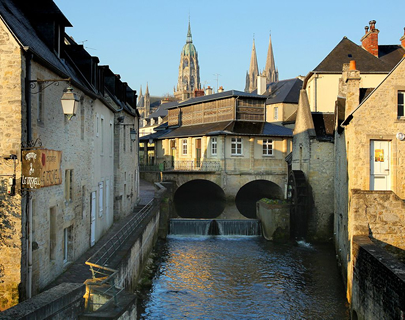 The Town of Bayeux
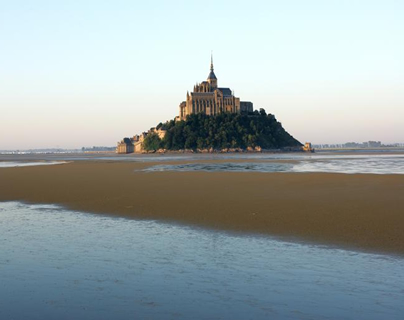 The Mont-Saint-Michel
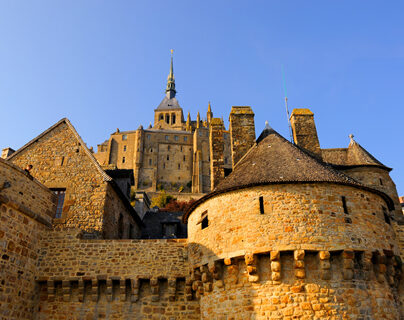 Mont-Saint-Michel
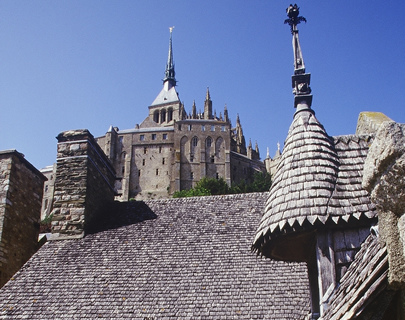 Mont-Saint-Michel
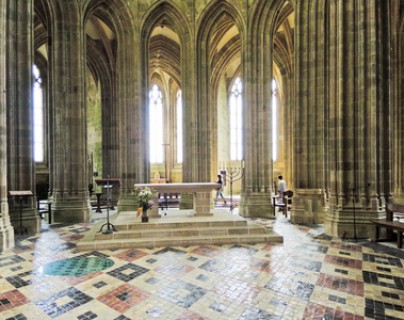 Chancel of the Church
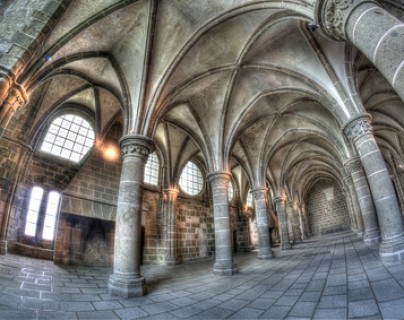 The "Knights Room"
 The 'Great Pillars' Crypt